home
radio show
guides
amphetamines
cannabis
cocaine
ecstasy
heroin
ketamine
LSD
mushrooms
help
q&a
essential info
emergencies
resources
gallery
articles
good books
links
the site
search
what's new
about us
faq
donate
subscribe
contact

our newsletter |
 |
 |
 |
GUIDES

 |
amphetamines
the most popular dance drug |
 |
cannabis
the most used recreational drug in the world
|
 |
cocaine
me me me! |
 |
ecstasy
glowsticks, whistles, coming up, feeling down |
 |
ketamine
the weirdest psychedelic and a damn fine cat anaesthetic
|
 |
heroin
not as addictive as you might think |
 |
LSD
most powerful mind-altering substance known to man
|
 |
mushrooms
one time South American gods
|

BLOG
»
If Drugs Were Legal
How would our friends, the multi-national pharmaceutical corporations, market them?

posted Thursday, October 11, 2007
»
The most widely used date rape drug?
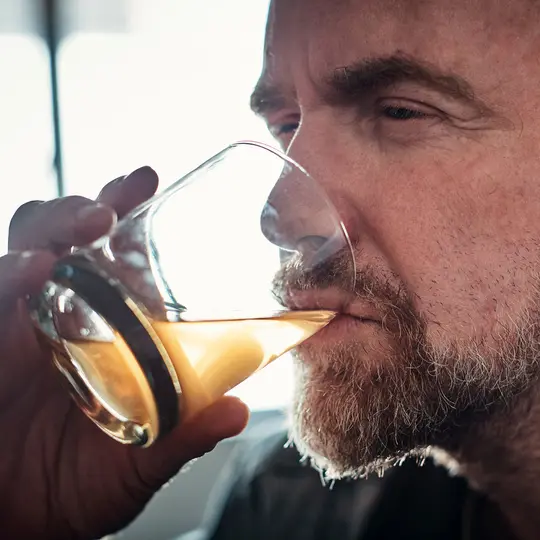
We've always held here that the 'date rape drug' panic is mostly made up. That is: women spiked with sedative drugs and then sexually assaulted. GHB was dubbed a date-rape drug despite the fact that its foul taste cannot be masked by any amount of soft drink. Rohypnol generated a massive panic despite there being no evidence of it being used to drug women. Now it seems the research has been done. And the conclusion? Rohypnol has never been used as a date-rape drug in the UK. The biggest and most widespread date-rape drug is - and always will be - alcohol.
Read the article
posted Saturday, February 03, 2007
»
Let's use Afghan heroin in our hospitals
Independent UK
"Afghan heroin available on the NHS? It may sound far-fetched but that is what two leading doctors from the British Medical Association have put forward as a way of dealing with a shortage of the drug. Heroin is used by doctors under its medical name diamorphine as a pain-killer for the terminally ill and after serious operations. But there is currently a severe shortage of legal diamorphine in the UK."
((This will never happen of course, since it crosses one too many discursive boundaries (i.e one boundary). The opinion of this God-class pain-killer has been cemented in the public's mind through years of propaganda: "heroin = bad". That's why, in debates on its shortage, the press have to use the constantly name 'diamorphine' to distinguish the same drug and protect the ears of the listeners. If the government were to sign up to an imaginative, intelligent solution like this, everyone would be like: 'Wha-? Heroin's a medicine? One that we're short of? Then why the fuck are we burning it???' The boundary between medicine and poison would be breached. And Western civilisation will go up in flames. Maybe. )))
posted Thursday, January 25, 2007
»
Can you change your personality with drugs?
Yes, you can but only temporarily.
Time Magazine article:
"Indeed, where there once seemed to be a clear boundary between mental health and mental dysfunction, it's now clear that these states lie along a spectrum. "Thirty years ago," says Farah, "only seriously depressed people took antidepressants. But I'm sitting in a coffee shop now where probably half the people have taken them."
((sobering thought [looks around coffee shop at Stepford wives around him])))
"Some ethicists argue that unless you're ill, you're not really yourself when you're on these drugs. On the other hand, says Farah, we change our brain chemistry no more with Prozac than with coffee or tea."
((((Yeah but c'mon, there's clearly a distinction between an ancient stimulant like caffeine field-tested over millenia and a lab-bred reuptake inhibitor which emerged from a lab 20 years ago))
"With that in mind, Farah is studying modafinil, a drug developed for narcolepsy that is prescribed off-label to patients with depression, ADHD or even jet lag. In the military, it's used to sharpen soldiers' alertness and cognition. Her research is attempting to determine how this chemical affects normal people. "Is there a trade-off," she wonders, "between focusing attention and reducing creativity? And if more workers use it to excel, will we have a workforce of narrow, rigid thinkers?"
(((Modafinil is a very interesting stimulant in that it increases alertness without the stimulation of say, amphetamines. We're currently preparing out report on it. It can have benefits on concentration, creativity, and productivity. However, in our opinion, it does have subtle but noticeable psychological side-effects not widely known but touched upon here. People who take it can become very robotic, very rigid with supressed emotions and little empathy. No surprise then its street name: "zombie"))))
Farah also imagines the day when we have what she calls a "neuro-correctional system" that could transform criminals into noncriminals. We already force sex offenders to take libido-dampening drugs or face denial of parole. A drug to dampen violent impulses might someday be similarly applied. That could, in theory, prevent crimes.
(((And off we spin into sci-fi lah-lah land)))
But so would the castration of rapists, and that is considered a nearly unthinkable invasion of a person's body. ((((not by California - they're already doing it and apparently it works ))))
posted Monday, January 22, 2007
»
Watch that deadly dry mouth
A drugs war is going on in New Zealand. Two sides: 1) the NZ government and establishment and 2) industrialised purveyors of 'party pills', legal alternatives to street drugs, containing the semi-legal stimulant BZP and other chems from the piperazine family (which also counts a little known pharm called viagra among its clan).
BZP is a relatively innocuous and weak stimulant, about 10% the strength of straight amphetamines. Taken in heroic enough amounts and combined with other piperazines (and likely alcohol), the synergised effects approach those of MDMA and speed. At least that's what it says on the packaging. TGDG reporters who have tried them reported the effects as 'mild' and 'cheap'.
Faced with a growing industry hocking these party pills, the New Zealand government responded with unusual creativity. They created a new 'Class C' category just for BZP type drugs and allowed the sale to continue. The argument? Party pills diverted drug users from the far more addictive and damaging drugs such as methamphetamine (or 'P' as it's dubbed in NZ). Wow. Western government responding intelligent to drug situation. Applaud applaud.
A good Guardian article about the situation (written by one of our writers by the way).
Of course - and we say this with a sigh - all that's happened is that party pill consumption has sky-rocketed. Now, the industry is worth over £30 million. The police don't like it. NZ youth do, regularly taking party pills to excess, often to harmful excess. Headlines are becoming screechier. What about the children etc. So the government is getting itchy and scratchy over its decision. To settle the debate, It's commissioned a selection of scientific studies into the safety of BZP. But - oh look - one has been leaked and hilariously set on fire by the NZ press in the crudest piece of consent manufacture we've seen in a long time.
Original story in the NZ Herald
"A Government-funded study into the effects of BZP had to be aborted because of the toll it was taking on participants in the trial.
The subsequent report, leaked to the Herald on Sunday, (((by whom? the government perhaps?))) says BZP - the main ingredient in party pills - has severe negative effects, especially if it's taken with alcohol.
After consulting the National Ethics Committee, scientists ended the trial because participants began to suffer nausea, dizziness and hallucinations.((((yeah fools - it's called being 'high'.)))
The confidential report, commissioned by the Ministry of Health and due to be released publicly within a few months, explains the dangers of the legal highs which have been sold, with few restrictions, in shops around New Zealand for seven years.
The 34-page study says that 43 per cent of the 35 people who participated - mainly males - suffered "severe adverse events" after being given a mixture of alcohol and BZP.
More than 80 per cent reported suffering a dry mouth, nose and throat when using BZP.
((((oh shit. Dry mouth? Fuck. That's too much. I'm never touching them pills.)))
About 35 per cent said that they vomited, experienced vision problems, felt dizzy, had difficulty passing urine, were confused and became agitated. ((((Again, these participants are on DRUGS)))
Thirty-two per cent said their libido took a knock. (((so this is a 'serious adverse effect' in macho New Zealand)))
(((Let's get this straight. A 'serious adverse effect' when taking drugs is death, respiratory distress, or unconciousness. That and / or serious psychological effect such as suicidal impulses or violent psychosis. Dry mouth and a pixel dick is not an serious adverse effect)))
However, the report also concludes that driver performance improves among those high on the drug. (((!!!)))
A party pill industry representative says the report reeks of bad science and he is concerned the Government will use it to decide if the $30 million industry should be closed.
Matt Bowden, chairman of Social Tonics Association of New Zealand - representing 70 per cent of Kiwi party pill companies - says the BZP doses given in the study were higher than those users normally consumed. "When thousands of people are taking these pills, we never see 43 per cent of them suffering adverse effects."
(((Oh yeah? Where are your studies, partisan?)))
Party pills have become one of the most popular recreational drugs in New Zealand, with retailers claiming to have sold 26 million. There have been no confirmed deaths linked directly with BZP products, banned in Australia, Denmark and the US.
Bowden says he is concerned the report has not been made public because the authors are waiting for it to be published in a medical journal. "How can the Government consider something that hasn't even been reviewed by the medical profession?"
The minister responsible for drug policy, Jim Anderton, says he is confident the research - one of four studies - is a fair reflection of the situation, and says it is not a problem that only two brands of BZP, Jet and Bliss, were used for the study. "It is not as though you have to have evidence that every single packet of something is dangerous." He concedes that the findings differ from other local research, such as a University of Auckland study which did not recommend stricter regulations.
A recommendation on the fate of party pills will be made to Cabinet in May, after a consultation process. Health Ministry officials are preparing a requested copy of the report for the United Nations. Almost half the Government's 2006 drug advisory committee research budget was spent on BZP.
(((((And there's the rub. You can bet the UN are putting pressure on the NZ Government to reign in their creativity when it comes to drugs laws)))
posted Sunday, January 21, 2007
»
No irony intended
This amusing juxtaposition in today's Daily Dose:
UK army tested 'stay awake' pills Dr Anna Casey told the Science and Technology Committee the MoD funded research into stimulant and performance-enhancing drugs and dietary supplements. "One is always looking for something that would give military personnel an extra edge," she told the committee which is investigating the use of such drugs in sport [BBC, UK]
Military drug tests making sure soldiers clean, sober Drug tests have started for Atlantic Canadian soldiers preparing to head to Afghanistan [Chronicle Herald, USA]
posted Thursday, October 26, 2006
»
Ketamine: the new anti-depressant?
"To my knowledge, this is the first report of any medication or other treatment that results in such a pronounced, rapid, prolonged [anti-depressant] response with a single dose." Bar ecstasy, cocaine, amphetamines etc
posted Tuesday, August 08, 2006
»
The Mothball Myth
How a small incident in France became the year's dumbest drug story.
posted Wednesday, August 02, 2006
»
No Link Between Smoking Cannabis and Cancer
From Scientific American magazine:
"The smoke from burning marijuana leaves contains several known carcinogens and the tar it creates contains 50 percent more of some of the chemicals linked to lung cancer than tobacco smoke. A marijuana cigarette also deposits four times as much of that tar as an equivalent tobacco one. Scientists were therefore surprised to learn that a study of more than 2,000 people found no increase in the risk of developing lung cancer for marijuana smokers.
"We expected that we would find that a history of heavy marijuana use--more than 500 to 1,000 uses--would increase the risk of cancer from several years to decades after exposure to marijuana," explains physician Donald Tashkin of the Uinversity of California, Los Angeles and lead researcher on the project. But looking at residents of Los Angeles County, the scientists found that even those who smoked more than 20,000 joints in their life did not have an increased risk of lung cancer.
The researchers interviewed 611 lung cancer patients and 1,040 healthy controls as well as 601 patients with cancer in the head or neck region under the age of 60 to create the statistical analysis. They found that 80 percent of those with lung cancer and 70 percent of those with other cancers had smoked tobacco while only roughly half of both groups had smoked marijuana. The more tobacco a person smoked, the greater the risk of developing cancer, as other studies have shown.
But after controlling for tobacco, alcohol and other drug use as well as matching patients and controls by age, gender and neighborhood, marijuana did not seem to have an effect, despite its unhealthy aspects. "Marijuana is packed more loosely than tobacco, so there's less filtration through the rod of the cigarette, so more particles will be inhaled," Tashkin says. "And marijuana smokers typically smoke differently than tobacco smokers; they hold their breath about four times longer allowing more time for extra fine particles to deposit in the lungs."
The study does not reveal how marijuana avoids causing cancer. Tashkin speculates that perhaps the THC chemical in marijuana smoke prompts aging cells to die before becoming cancerous. Tashkin and his colleagues presented the findings yesterday at a meeting of the American Thoracic Society in San Diego."
Full link
posted Monday, June 05, 2006
»
Man takes 40,000 ecstasy pills over 10 years
Doctors from London University have revealed details of what they believe is the largest amount of ecstasy ever consumed by a single person. Consultants from the addiction centre at St George's Medical School, London, have published a case report of a British man estimated to have taken around 40,000 pills of MDMA, the active ingredient in ecstasy, over nine years. At his peak use, the man was taken 25 pills a day. Trivia: this story was written by one of The Good Drugs Guide writers.
posted Thursday, April 06, 2006
|
|
 |
 |
|
 |